06 December 2009

Cast away the works of darkness

The year now drawing to a close has been one of great change in my life. Most of the change is too personal to put into a blog post. Change, for me, is never easy. To reflect upon the year 2009, I decided to take a silent retreat during Advent from the blog.

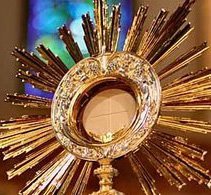
However, today, I am forced by the spirit to make a small post in the form of a photo I created after reading a statement by the worst English Archbishop since Cardinal Wolsey. Who would have believed it would be an archbishop of Canterbury who destroyed the Anglican Communion.

Rowan is as silent as the tomb regarding the plight of homosexuals in Uganda, but he instantly screamed bloody murder when a lesbian was elected bishop suffragan in Los Angeles. I think I know what Christ will say to Rowan on the day of judgement -- "Depart from me ye worker of iniquity."

Make sure to read this by Andrew Brown who calls Rowan the coward he is.

22 November 2009

Where were you?

"Tolerance implies no lack of commitment to one's own beliefs.
Rather it condemns the oppression or persecution of others."
JFK


Mrs. Cooper's class; we were just beginning a spelling test.

Christ the King - The Sunday Next Before Advent

Christ the King - The Sunday Next Before Advent
Dignus Agnus

(RCL) 2 Samuel 23:1-7 and Psalm 132:1-13, (14-19); Revelation 1:4b-8; John 18:33-37

    Introit: The Lamb that was slain is worthy to receive power and divinity and wisdom and strength and honor; to Him be glory and empire for ever and ever. -- (Ps. 71. 1). Give to the King, O God, Thy justice, and to the King's Son Thy judgment.

    Collect: Almighty and everlasting God, whose will it is to restore all things in thy well-beloved Son, the King of kings and Lord of lords: Mercifully grant that the peoples of the earth, divided and enslaved by sin, may be freed and brought together under his most gracious rule; who liveth and reigneth with thee and the Holy Spirit, one God, now and for ever. Amen.

    Gospel: Therefore Pilate entered again into the Praetorium, and summoned Jesus and said to Him, "Are You the King of the Jews?" Jesus answered, "Are you saying this on your own initiative, or did others tell you about Me?" Pilate answered, "I am not a Jew, am I? Your own nation and the chief priests delivered You to me; what have You done?" Jesus answered, "My kingdom is not of this world. If My kingdom were of this world, then My servants would be fighting so that I would not be handed over to the Jews; but as it is, My kingdom is not [a]of this realm." Therefore Pilate said to Him, "So You are a king?" Jesus answered, "You say correctly that I am a king For this I have been born, and for this I have come into the world, to testify to the truth. Everyone who is of the truth hears My voice."


“Where is he who is born king of the Jews?” the magi asked.

That question alerted Herod to the presence of a rival in his midst. To eliminate the rival he had his soldiers kill all children in an entire region of his realm.

“Are you the king of the Jews?” Pilate asked Jesus mockingly.

The very idea of the Jews having a king in any meaningful sense must have seemed ridiculous to Pilate. Furthermore, Jesus must have looked far from regal as he stood before Pilate. He had been arrested in Gethsemane; all his disciples had abandoned him; he had defended himself before a Jewish court; and he had probably been roughed up by Roman soldiers. But there was also a serious side to the question. A king of the Jews would have represented a challenge to Pilate’s authority and (more importantly) to his masters in Rome. The Roman Empire responded to such challenges just as ruthlessly as Herod had.

In reply to Pilate’s question, Jesus denied that he was a king in any way that would make sense to the Roman governor. “My kingdom is not from this world. If my kingdom were from this world, my followers would be fighting to keep me from being handed over to the Jews.”

The confrontation with Pilate was rich with irony and ambiguity. Pilate appeared to be powerful but was really powerless; Jesus appeared to be powerless but was really powerful. John had already told his readers that part of Jesus’ mission was to “cast out” the ruler of this world who has no power over Jesus. Paradoxically, Jesus brought down the “ruler of this world” by submitting to his power; his death brought about the destruction of the powers that nailed him to the cross.

Pilate and Herod were not the only ones who misunderstood the nature of Jesus’ kingship. Even the disciples failed to understand it. James and John wanted to sit beside Jesus in his kingdom. To “sit” was to occupy a position of power, and to sit beside the king was to share in his power. But Jesus told them that they completely misunderstood the nature of his kingship and kingdom: “Whoever would be great among you must be your servant.”

A friend who is a rabbi once said to me, “Christian triumphalism makes me uneasy.” It makes me uneasy, too, and the feast of Christ the King is awash in triumphalism.

“Crown him with many crowns,” we sing, and “All hail the power of Jesus’ name.” I am uneasy because it is all too easy to give Jesus the crown but to take the power for ourselves. The followers of the Crucified One overcame Rome by martyrdom, but after Constantine’s conversion, the victorious Christians started making martyrs of their former adversaries. The history of the church is spattered with blood because power requires violence to maintain itself. To put it another way, we use the rhetoric of Jesus but behave like Herod and Pilate.

The kingdom over which Jesus reigns still defies our understanding. He rules over a kingdom with no borders to defend, no soldiers to defend it, and no weapons for the soldiers to use. It is a kingdom that inverts our values. The one who serves is the one who rules.

We still ask the questions that the magi and Pilate asked: “Where is he who is born king of the Jews?” and “Are you the king of the Jews?”

Knowingly or not, Pilate answered his own question; the Gospel of John tells us that “Pilate wrote a title and put it on the cross. It read: ‘Jesus of Nazareth, the king of the Jews.’”

The cross is Jesus’ royal throne and also the antidote to Christian triumphalism. Jesus reigns from the cross, and to share his kingship, we must also share his suffering. There is plenty of room at the right and left hands of Jesus, but those who would share his power must also share his cross.

Like the magi, we are also on a pilgrimage seeking the king. Unlike them, we cannot bring our gifts to a manger in Bethlehem. But we can still find him in those he came to serve.

As it says in Matthew 25:“Then the King will say to those at his right hand, ‘Come, O blessed of my Father, inherit the kingdom prepared for you from the foundation of the world; for I was hungry and you gave me food.’”


The Rev. J. Barry Vaughn, Ph.D., has led congregations in Alabama, California, and Pennsylvania. He has preached at Harvard, Oxford, and the Chautauqua Institution, and more than fifty of his sermons have been published. He is rector of St. Alban's Episcopal Church in Birmingham, AL.

15 November 2009

Pentecost XXIV - Trinity XXIII

Pentecost XXIV - Trinity XXIII
Adorate Deum
Proper 28, Year B

(RCL)1 Samuel 1:4-20 and 1 Samuel 2:1-10; Hebrews 10:11-14 (15-18) 19-25; Mark 13:1-8

    Introit: Adore God, all you His Angels: Sion heard, and was glad: and the daughters of Juda rejoiced. -- (Ps.96. 1). The Lord hath reigned, let the earth rejoice: let many islands be glad.

    Collect: Blessed Lord, who hast caused all holy Scriptures to be written for our learning: Grant that we may in such wise hear them, read, mark, learn, and inwardly digest them, that, by patience and comfort of thy holy Word, we may embrace and ever hold fast the blessed hope of everlasting life, which thou hast given us in our Savior Jesus Christ; who liveth and reigneth with thee and the Holy Spirit, one God, for ever and ever. Amen.

    Gospel: As Jesus was leaving the temple, one of his disciples said to him, "Look, Teacher! What massive stones! What magnificent buildings!" "Do you see all these great buildings?" replied Jesus. "Not one stone here will be left on another; every one will be thrown down." As Jesus was sitting on the Mount of Olives opposite the temple, Peter, James, John and Andrew asked him privately, "Tell us, when will these things happen? And what will be the sign that they are all about to be fulfilled?" Jesus said to them: "Watch out that no one deceives you. Many will come in my name, claiming, 'I am he,' and will deceive many. When you hear of wars and rumors of wars, do not be alarmed. Such things must happen, but the end is still to come. Nation will rise against nation, and kingdom against kingdom. There will be earthquakes in various places, and famines. These are the beginning of birth pains.

In T. S. Eliot’s poem, “The Four Quartets,” he talks about going to a church at Little Gidding, the site of a small Anglican religious community founded in the seventeenth century. Eliot writes, “You are not here to verify, instruct yourself, or inform curiosity or carry report. You are here to kneel where prayer has been valid.”
Many of us have felt this desire to kneel where prayer has been valid. For those of us who pray regularly, we may long to join our prayers to those who have gone before us. For those of us who have a hard time with prayer, we still somehow desire to kneel in that place where prayer has been valid. In either case, when we come into a place where truthful prayer has been made, many of us feel like falling to our knees.

People attend church services for a variety of reasons. The preaching. The music. The fellowship. The coffee hour. The stained glass windows. One extremely important reason people come to church is to kneel in a place where prayer has been valid. Somehow, we want to put ourselves in that place where truthful prayer has been offered. Even when we feel like we don’t have the words ourselves, perhaps especially when we don’t have the words ourselves, we want to go to that place and receive the sustenance that comes from being in a place where prayer has been valid. Our churches are many things, but one thing that seems essential is that it has been and continues to be a place where truthful prayer is made.

Our Old Testament lesson for today from the First Book of Samuel begins with the simple statement “Hannah prayed.” Such a simple statement, and yet encompassing such depths that we will never fully fathom in this mortal flesh. Archbishop Michael Ramsey was once asked how long he prayed each day, and he responded by saying, “Oh, I suppose only two or three minutes.” Then he added that he had usually been at his prayers in chapel for an hour in order to get to that two or three minutes of prayer.

The Catechism in our Book of Common Prayer gives us a nice introduction to the principal kinds of prayer. This is helpful because often times we think of prayer as simply asking God for things. And, indeed, these are valid prayers, prayers of petition and intercession in which we bring before God our needs and the needs of others. However, our Prayer Book deals with intercession and petition only after explaining prayers of adoration, praise, thanksgiving, penitence, and oblation – and the order may be telling us something important. Perhaps there is a reason that adoration and praise and thanksgiving are at the top of the list.

The Westminster Catechism says that the chief end of human beings is “to glorify God and enjoy him forever.” Notice it does not say the chief end of human beings is “to ask God for things and to keep asking for things forever.” It does not say “to confess our sins to God and to keep confessing our sins forever.” Rather, it says “to glorify God and to enjoy him forever.” When all those other types of prayer pass away, adoration and praise of God will continue forever. As valid as all other types of prayer are, someday they will end. Someday all prayers will be encompassed by adoration and praise.

As German theologian Gotthold Mueller wrote:

“Praise of God … according to the witness of both Old and New Testaments is the only form of prayer enduring ‘from ages to ages.’ As with faith and hope, all other forms of prayer (petition, intercession) come to their eschatological fulfillment and so to an end. What ultimately endures is the doxa (praise) of God which is, at the same time, the only true salvation of humankind and of the whole creation.”
What is the chief end of human beings? To glorify God and enjoy him forever.

What is amazing about prayers of adoration and praise is not only that they will endure from age to age, but also that we can participate in these prayers right now. And Hannah, in our Old Testament lesson for today, shows us how. Hannah’s prayer is a prayer of adoration and praise and thanksgiving. She prays, “My heart exults in the Lord.” Adoration. “There is no Holy One like the Lord, no one beside you; there is no Rock like our God.” Adoration and praise. “The Lord makes poor and makes rich; he brings low and he exalts. He raises up the poor from the dust; he lifts the needy from the ash heap, to make them sit with princes and inherit a seat of honor. For the pillars of the earth are the Lord’s and on them he has set the world.” Adoration and praise and thanksgiving. Hannah’s prayer then, now, and from age to age. Our prayers joined with Hannah’s, then, now, and forever.

Richard Foster in his book Prayer says that adoration is

“not a special form of prayer, for all true prayer is saturated with it. It is the air in which prayer breaths, the sea in which prayer swims. In another sense, though, it is distinct from other kinds of prayer, for in adoration we enter the rarefied air of self-less devotion. We ask for nothing but to cherish him. We seek nothing but his exaltation. We focus on nothing but his goodness.”
All true prayer is saturated with adoration.

We long to kneel in that place where prayer has been valid because in some way we know that when we do so we are joining in something that will endure from age to age. All true prayer that is saturated with adoration and praise and thanksgiving will endure forever. Perhaps that is why people still come to church services today.

To join in the prayers of our forbearers whose hearts exulted in the Lord, who praised God, and who gave thanks to God for his mighty acts of redemption.

To join in the prayers of all those ordinary and extraordinary saints who have gone before us who have lifted their hearts giving God their thanks and praise.

To join with the present company of the faithful, to add what God has done in our lives to the record of his mighty deeds in our own prayers of adoration and praise.

And to join our voices with angels and archangels and with all the company of heaven who forever sing hymns and proclaim the glory of God’s Name.

"You are not here to verify, instruct yourself, or inform curiosity, or carry report. You are here to kneel where prayer has been valid."

-- The Rev. Dr. Joseph S. Pagano is rector of Emmanuel Episcopal Church in Baltimore, MD. He received a Ph.D. in theology from Marquette University in Milwaukee, WI.