06 August 2008

The Feast of the Transfiguration of Our Lord

Today is the Feast of the Transfiguration of Our Lord.

O God, who on the holy mount revealed to chosen witnesses your well-beloved Son, wonderfully transfigured, in raiment white and glistening: Mercifully grant that we, being delivered from the disquietude of this world, may by faith behold the King in his beauty; who with you, O Father, and you, O Holy Spirit, lives and reigns, one God, for ever and ever. Amen.

Today is also the anniversary 63rd anniversary of the annihilation of Hiroshima by the first atomic bomb used. Let us pray for the victims of violence and let us pray for peace.

Eternal God, in whose perfect kingdom no sword is drawn but the sword of righteousness, no strength known but the strength of love: So mightily spread abroad your Spirit, that all peoples may be gathered under the banner of the Prince of Peace, as children of one Father; to whom be dominion and glory, now and for ever. Amen.

O God, the Father of all, whose Son commanded us to love our enemies: Lead them and us from prejudice to truth: deliver them and us from hatred, cruelty, and revenge; and in your good time enable us all to stand reconciled before you, through Jesus Christ our Lord. Amen.


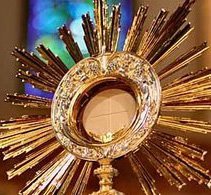
Make sure to read Padre Mickey's post on the Transfiguration. You'll find it here. Thanks to him also, for the cool icon I shamelessly stole from his blog!
---

Between Friday at noon and Sunday at 9 p.m., TTLS had 1,001 unique hits. Very few people leave comments. Please take a momet to say "hello." I'd like to know who is reading and where you are located!

04 August 2008

Tell the disciples -- and Peter

When I am discouraged, I usually turn to the gospel of Mark. His is my favourite gospel and Isaiah is my favourite TNACH book. (Mark in almost any version but Isaiah only in the KJV – my Hebrew is nonexistent anymore).

I love Mark’s Jack Webb approach: “Just the facts, Ma’am.” Mark is so blunt. He refuses to sugar coat the disciples. Mark just exposes them, warts and all. They are fully human, petty, childish, dumb, and yet loyal to the end – almost. Mark is the “scratch and sniff” gospel. For all of these reasons, I love Mark and I love to teach Mark.

My favourite verse is 16.7 – But go tell his disciples – especially Peter – that he is going ahead of you to Galilee. There you will see him, just as he told you.”

I have heard that verse at least once each Easter for fifty years (I was born 4 August, by the way). But I did not understand the real (and most important) message it contains until this past Lent. I taught Mark for a group of UCC folk. These mostly women were the best class I have ever taught. They were open to all possibilities, receptive to new and controversial information and they never closed down, not once. Even when they disagreed, they continued to talk and ask questions, and at the end of each class, there was fellowship with everyone.

Preparing to teach chapter sixteen, I made a holy hour before I wrote my “lecture.” While sitting in the presence of Our Lord, I had one of “those moments.” I know that all of you already know this, but you must remember that I am, to quote Winne the Pooh, "a bear of very little brain" so it took 51 years to get the point.

I read verse sixteen and started into verse seventeen but the Holy Spirit slapped me up-side the head and made me read verse sixteen over and over and over. Finally, I understood the real message of that verse

I had always presumed that Jesus wanted the disciples to know he was going Galilee and would meet them there. Yes, that was important to know. He had chosen Peter as the first among equals, so Peter needed to be mentioned – to give him the place of prominence.

All of that is true, but I realized there was so much more in those few words.

The message is that Jesus wanted Peter to know – especially Peter. Peter was in deep despair: he had denied knowing Jesus, he had promised to stay with Jesus but fled in terror. Nevertheless, Jesus said tell Peter! Jesus wanted him to know. That is the real message. “Tell my friend Peter I'll meet him in Galilee.” I cannot articulate what understanding that did for me.

The Spirit was not finished with me, though. I understood that if Judas has been alive, Jesus would have said, “Tell the disciples -- especially Peter and Judas…”

Jesus had already forgiven them – he had forgiven them even before they knew what they were going to do. In those few words Jesus said, “It is okay – it’s really okay. I love you just as much as I did five days ago.”

In that moment, I understood that Paul, too, understood: “Neither death nor life, nor angels nor rulers, nor things present nor things to come, nor powers, nor height nor depth, nor anything else in all creation, will be able to separate us from the love of God in Christ Jesus our Lord.”

Neither slave, free, Greek, Jew, Gentile, male, female, heterosexual, homosexual, lesbian, bisexual, transgender, asexual, radical, conservative, believer, or atheist -- nothing can separate us from his love.

Jesus lived with us; he knows our frailties and our weaknesses and yet he still accepts us and forgives us before we even stumble. In spite of everything, he knows about us, and yet he stills calls and claims us as his own.

His love is greater than our ability to screw things up. That is the real message delivered that morning.

Go tell the disciples, especially those who need to hear it most, that he goes before them into [the unknown] and they will see him there.”

That is the message to us today. As we tread unto the unknown, Jesus is already there waiting for us, having prepared all things for our arrival. He has the light on for us. Fear not.

Deo Gratias!

03 August 2008

A Witness for the Future

Now that it is eventide and I have completed Evensong, it is liturgically Monday, and I can post the following without violating my Lord’s Day Shalom.

Jim Naughton, who knows more about what has happened at Lambeth than almost anyone, agrees with my Saturday post. His posts, Low Clouds, Low Mood, and the final post have some important observations.

[The U.S. Bishops] were more pessimistic about the chances that the Episcopal Church will be able to move decisively toward full inclusion at our General Convention next summer.

As he points out, it does not matter how “provisional” the final draft is, the fact remains that the ABC, the Anglican Communion Office, want to drag the Anglican Communion back to the 19th century.

[They] want us to maintain our de facto ban on the consecration of partnered gay candidates to the episcopacy, and to ban either the authorization of rites of same sex blessings, or to root out the practice of same sex blessings entirely –it isn’t clear which.

Rowan states that if the American and Canadian churches do not accept the moratorium then “As a communion we would be in great peril.” Uh, Rowan, that boat sailed a couple of years ago. When we were in the deepest peril, you supported the Flat Earth Communion and created any future peril.

Naughton echoes what I have been saying for months – our bishops are going to back off from supporting the full inclusion of all members of The Episcopal Church:

If we overturn, supersede or otherwise mess with Resolution B033 from General Convention 2006, or if we move toward authorizing texts to bless same-sex unions, we will, at a minimum, set off another round of recriminations and endless meetings; we will endure additional efforts aimed at pushing us out of the Communion, countered, no doubt, by our own elaborate, energy sapping campaign to preserve our membership.


Even bishops who favour full inclusion are reluctant to pick this fight right now. Yet there is strong support for challenging B033 in the House of Deputies, and I worry that without creative leadership we may find ourselves in a power struggle as the convention approaches.

So, there you have it from a more authoritative voice than mine: The U.S. bishops are going to throw GLBT members under that speeding bus as “the act of love” necessary to attenuate the flat-earth-bible-literalist society – for a while.

If there is a power struggle at GC09, the bishops will learn where the power in TEC resides and it is not in the House of Bishops.

Rowan and “the powers that be” want the moratoria and a covenant in the worst way. Why Rowan wants it is a complete mystery, really. Why the “Central Committee” wants it is clear -- power and more power. Their dark ages attitudes may prevail, but it will be a very small Communion that “the powers that be” rule in their pontifical manner.

Thank heavens TEC has many justice-minded bishops including the Rt. Rev'd. Jon Bruno (Los Angeles) and the Rt. Rev’d. Marc Andrus (California). Both have stated that they will not end the blessings in their respective dioceses. According to Naughton:

Numerous Episcopal dioceses permit the blessing of same-sex relationships, but without a rite. Bishops Jon Bruno and Marc Andrus have already said that they would not attempt to stop the blessing of gay relationships in their diocese.

Turning to the proposed document itself, Naughton says:

The Continuation Group is composed entirely of people who disapprove of gay blessings or gay ordination, and both groups are led by men who have endorsed the call for a separate ideologically-based province in North America.

That is like asking the KKK and Arian Nation to draft a document on racial issues. But Rowan just doesn’t get it. Their biases doomed the document before the computer warmed up. Had the committee been a balanced group, the document might actually have worked because it would have been fair to all concerned.

What is apparent is that the Central Committee wants TEC out; that is all that will satisfy them. Why, I wonder? Perhaps they are angry that TEC foots the bill for the whole Communion. They certainly have chosen completely to ignore the fact that that TEC was found compliant with the Windsor report.

Rowan feels that the whole mess will be settled within a year and the provinces can then vote on the “covenant.” It is amazing to see how incredibly naive this man is. On the other hand, perhaps, he knows that he will be in retirement by then and his successor will be dealing with the issue.

What Rowan’s Central Committee is going to deliver is the death certificate. We will be singing “and it’s not only merely dead, it’s really most sincerely dead.” (Apologies to the Wicked Witch of the East.)

Naturally, gay and lesbian groups at the conference have objected to calls for a moratorium. This group will pay the full price. No one else is being asked to sacrifice a single thing. Williams was relying on an already marginalized minority to make sacrifices that absolutely will not preserve the unity of the communion. “Sacrifice has to be accepted voluntarily that’s true,” Williams said. “That’s why this means something about consent. There are those, I know, who won’t be willing to take on that kind of sacrifice." Well no kidding.

“There is something about the preservation of the global fellowship that is bigger than any of us.” poor Rowan, the global fellowship is over, it no longer exists. The GS has gone and yet TEC and the AC of C with is GLBT baptized are still being sacrificed for a dead idol. Talk about idolatry!

Rowan and his Central Committee have not even had the decency to talk with the people they are sacrificing. The Rev. Susan Russell, president of Integrity USA said Williams was calling for sacrifice from people who had not been represented at the conference.

“I think it is said that the Archbishop of Canterbury has placed himself so far on the wrong side of history and the wrong side of the gospel on this issue.”

I agree with the Rt. Rev’d. Dean Wolfe, Kansas,

Anyone who thinks we will come to a definitive conclusion overnight doesn't understand the church in general and the Anglican Communion in particular . . .

Wolfe said it was essential that the Communion not attempt to preserve its unity "on the backs" of gays and lesbians.” These things take time but in the end we tend to come round right."

Bishop Steve Lane of Maine said he was "really moved and inspired by the vision of catholic humanity and the vision of Christ in all" that Williams explored during the conference. However, he said he felt tension between that vision and what seemed to be Williams' request that "some churches sacrifice some of their members. I don’t think we can sacrifice a group of the baptized. That is beyond our power and it would be a grave wrong. "

Thank heaven that we have some Godly bishops.

I would advocate our walking away now, if it were not for the fact that the majority of the communion needs our witness of justice. We are large enough and strong enough to lead the struggle for justice -- if we chose to do so. The Episcopal Church needs the witness of other provinces, too; but our witness is a beacon on the hill for them. They see our efforts to embrace all people and they know that they do not stand alone in the struggle against injustice.

Brothers and sisters, the moment is here. God is offering us an opportunity of monumental imortance and consequence. Moments such as this do not often present themselves. We must chose to do the righteous thing becuase God will call on us to answer for how we respond to this opportunity.

As science moves closer to irrefutable evidence that there is a "gay gene," the ABC, his homophobic Central Committee, and the so-called “Global South” (in whatever alphabet soup they reincarnate) are going to look like the fools they are.

What a sad thing it is to realize most of our bishops may be willing to sacrifice their convictions and their baptismal covenants for the sake of a communion that is no more. It is heartbreaking to know the leaders of that communion are willing to abandon a huge portion of its membership while invoking the name of Jesus and the bible to do so.

But whatever they do, one thing is certain, the old communion is dead: A new and marvelous work has begun and the Lord's work will not be halted.

I’m going to let a hymn have he final words:

The church of Christ in every age,
beset by change but Spirit-led,
must claim and test its heritage
and keep on rising from the dead.

Across the world, across the street,
the victims of injustice cry
for shelter and for bread to eat,
and never live until they die.

The let the servant church arise,
a caring church that longs to be
a partner in Christ's sacrifice,
and clothed in Christ's humanity.

For he alone, whose blood was shed,
can cure the fever in our blood,
and teach us how to share our bread
and feed the starving multitude.

We have no mission but to serve
in full obedience to our Lord:
to care for all, without reserve,
and spread his liberating word.

Pentecost XII

Pentecost XII

Proper 13 - Year A [RCL]
By James Hinckley

Genesis 32:22-31, Psalm 17: 1-7, 16; Romans 9:1-5; Matthew 14:13-21


The gospel for this Sunday is from Matthew, chapter 14, verses 13 to 21, and it is perhaps the best known parable of the Bible.

Or is it?

Well, yes and no. Yes, it is certainly well known. But no, even though it is commonly referred to as “The Parable of the Loaves and Fishes,” it is actually not a parable. Merriam-Webster defines “parable” as “a usually short fictitious story that illustrates a moral attitude or a religious principle.”

And while this story certainly illustrates both a moral attitude and a religious principle, it is presented by the author of the Gospel of Matthew as an actual event from the ministry of Jesus.

In fact, one reason it may be so well known is that the miracle actually occurred twice. These two incidents are cited in John chapter 6, Luke chapter 9, Matthew chapters 14 and 15, and Mark chapters 6 and 8.

So, what does it mean? Well, that was the very subject of a bit of seafaring chit-chat between Jesus and the disciples related in Mark:

“‘When I broke the five loaves for the five thousand, how many baskets full of broken pieces did you take up?’

“They said to him, ‘Twelve.’

“‘And the seven for the four thousand, how many baskets full of broken pieces did you take up?’

“And they said to him, ‘Seven.’

“And he said to them, ‘Do you not yet understand?’”

Well, if the disciples, sitting not five feet from Jesus, found the meaning obscure, perhaps we may be forgiven for not fully understanding it either.

But one of the truly amazing things about the Bible is that it is indeed a living document. Taking virtually any of the biblical precepts, one can examine it in detail, turning it this way and that in various qualities of light as if it were a huge amethyst crystal, and gain refreshing insights not only into modern life, but into ourselves as well. Although written over 2,000 years ago, the Bible is a beacon that casts a brilliant illumination across the millennia to shine right in front of us today. Few if any works, even those of comparable antiquity, can even come close to this universal quality.

We may be just as perplexed as the disciples when it comes to interpreting these two events as they occurred in the year AD 30, but as we turn and examine this story from a modern point of view, discovering that “moral attitude and religious principle” is perhaps an easier task, and perhaps also much more useful to us as we resume our secular existence outside these walls. In fact, if we hold this story up to the light and gaze through it intently, perhaps we can see aspects of our own lives illuminated startlingly in a way we may never have anticipated.

Immigrants to the United States are drawn by the American dream, or at least the version of it that our own public image, broadcast and circulated around the world, portrays it: the lavish home, manicured lawn, multiple automobiles, and indulgences of every stripe. In fact, we are all, to a greater or lesser degree, driving an economy that itself is driven by our need to acquire “stuff.” If consumer spending on durable goods takes a nosedive, our economic growth goes right down with it. We wonder, perhaps, how many Third World countries have self-storage facilities to park the things they do not have room for.

Gazing still through this gospel story as we hold it up to the light, perhaps we can see even father back.

Was there ever a time when we were content just to be? Perhaps as newly minted high school graduates or college students our concerns were less upon acquisition and more concerned with survival – of ourselves or of the planet, depending upon our individual focus and that of our generation.

And what can we say about those times? Were they difficult? Certainly! But were they not also somehow simpler, less frenetic? More filled with wonder? We had time to think, to ponder, and to seek answers to momentous questions that we couldn’t even articulate through the medium of songs that we felt “said what must be said.”

Now if we look at the surface of this gospel story, we may see the image of our own faces mirrored in it. Is it a face that is too busy to think, too harried to ponder, and has that face abandoned the search for answers to questions that it has all but forgotten? Or perhaps, like the material possessions we seem to accumulate, the questions have multiplied to such an extent that we simply push them into a little box deep within our soul to be addressed later. When is “later”? Today is certainly later than those wonder-filled days many years ago. Is today late enough?

Now, perhaps, we are equipped to dive into the story of the loaves and fishes and extract our own meaning from those 2,000-year-old words.

Jesus is faced with a primitive dilemma: feeding five thousand men and perhaps as many more women and children with only five loaves and two fish. How can this possibly be done? There are, after all, laws of mass at work here, aren’t there?

“Taking the five loaves and the two fish, he looked up to heaven, and blessed and broke the loaves, and gave them to the disciples, and the disciples gave them to the crowds.”

We are so accustomed to thinking in terms of “concrete reality” that we fail utterly to perceive the “divine reality” that exists right alongside it hidden, as it were, in plain sight:

“Taking the five loaves and the two fish, he looked up to heaven, and blessed and broke the loaves, and gave them to the disciples, and the disciples gave them to the crowds.”

Linked with the Father by a bond of unimaginable strength, Jesus submitted this primitive dilemma to Him, and the unimaginable solution was manifest to the abject wonder of all. But how much should we really wonder at this today? After all, we have 2,000 years of experience reflected in the writings of scripture upon which to base our expectations. With all these years and with all those writings to inform our expectations, which of our dilemmas could not be solved by establishing a pathway between ourselves and God through Jesus and, just as Jesus did, submitting these dilemmas to God?

We need only exhibit the courage to transform ourselves into the wonder-filled souls of years ago, informed now by our faith that God is the long-sought source of the answers to those questions.

Will we be able to hear his answer when it comes? Will his answer be the answer we are seeking? Will we have the courage to “pass out the baskets,” trusting in our own complete faith that he has provided for our needs as may be best for us?

To borrow from our Baptismal Covenant, with God’s help, we will.

And what a great way to start “cleaning out our stuff.”

-- James Hinckley is a member of St. Timothy's Church in Fairfield, CT, and is enrolled in the Ministry Exploration and Education Program of the Diocese of Connecticut. E-mail: jameshinckley@optonline.net.